
How to Do Public Writing


© The Author(s), 2025. Published by Cambridge University Press
Salina, Kansas – small-town America. 1993. I’m in seventh grade, and kids all across town are walking out of school, marching down Main Street to city hall in protest of local government’s failure to fund public schools. In the United States, forty years of defunding public education has cultural consequences. Twenty years of defunding the humanities has consequences. American citizens have received less training in the arts of interpretation at a time when life – namely the internet – gives individuals an information overload every day. Scholars writing for public venues return education to the people that government has taken it away from.
Flash forward a bit: I had some dark days in my teen years. I didn’t fully process them until twenty years later when I wrote a piece called “Hamlet Is a Suicide Text – It’s Time to Teach It Like One.”Footnote1 Public writing can bring our academic work back to the very human experiences and questions that brought us to academia in the first place.
In college, I fell in love with John Milton’s poetry. When teaching now, I start my Milton classes with a close reading of the first epic simile in Paradise Lost – which compares Satan to a sleeping whale that a sailor has anchored his skiff to, thinking it’s an island, and then the whale wakes up and goes plunging down, dragging the sailor along. I didn’t expect this classroom activity to become an essay unprovocatively titled “Trump is Satan.”Footnote2 Public writing allows us to find the personal and the political in the academic work we do.
1. Public writing: From why-to to how-to
Public writing for mainstream newspapers, magazines, and websites makes the world of ideas accessible to people outside the hallowed halls of higher education – how dare you. It disrobes the habits of academic writing and respects the skills of the journalist who can turn complexity into clarity for non-specialist readers. It takes many forms – from the 800-word op-ed in a local newspaper to the 3,000-word feature story in a national magazine, from the short-form listicle to the long-form blogpost, from the timely intervention where research-backed expertise provides informed commentary on an unfolding news story to the timeless think piece that’s a quick hit of intellectual thought for someone’s morning coffee or commute.Footnote3
Public writing is scholarship for the folks we grew up with.
People are hungry for knowledge. Most live busy lives outside the academic circuits of knowledge production. Public writing creates opportunities for education – both general education for readers who aren’t specialists on a topic and continuing education for people who aren’t in school anymore.
The value proposition of public writing has skyrocketed in recent years as scholars have helped societies around the world interpret the use and abuse of political power. It soars higher every time people find a little relief from the onslaught of awfulness in the joys of reading, thinking, and talking about human creativity in all its diversity.
Beyond service to society, two reasons to do public writing stand out. First, at a time when education is under attack, public writing is one of the best ways to demonstrate – to show not tell – the social value of scholarly work. Second, from the perspective of pure self-interest, public writing makes you a better scholar – a better thinker, writer, researcher, and teacher who can convey knowledge with maximum impact.
Society’s longing for knowledge does not disappear even if, somewhere along the way, scholars cloistered on their campuses have become complacently detached from the worlds they study. It doesn’t disappear when governments defund the humanities. Admittedly, for professors, there’s a structural incentive system – tenure – discouraging junior scholars from public writing.Footnote4 Yet these recent trends have created a rift between people looking for knowledge and scholars ready to serve at a time when the interpretation of human activity has never been more urgent. That’s why writer Devoney Looser has called for “a new academic normal in which virtually every piece of scholar-facing humanities work generates a public-facing writing component.”Footnote5
But how to do public writing is a mystery. You learn through trial and error. No one ever teaches you. And fear of the unknown prevents scholars from public writing.
2. Calibrating for public writing
Many academics have had the experience of reading an article about their area of expertise in a major national venue that gets things about half-right. It’s usually a journalist (who knows how to do public writing) dipping into content that they are not deeply familiar with. Academics can and should defend the integrity of their fields; those same academics should also learn the journalist’s skills of mass media communication. Public writing works best when subject-matter experts do it themselves.
Public writing must come in addition to – not in place of – our academic work. The strength of our public writing depends on the strength of the academic work it grows from.Footnote6
If you don’t want to do public writing, that’s fine. No worries. It’s not for everyone. No one is going to force you. But don’t get in our way. You need us, even if you hate us, mock us, critique us – just as those of us interested in public writing desperately need the scholarly work of people who aren’t.
The only way to do public writing successfully is to stop worrying if your colleagues think you’re smart enough. Public writing is not for scholars. I don’t try to please my retired fire-fighter father-in-law when writing for Shakespeare Quarterly.
Public writing isn’t financially profitable, but it will be rewarding for you and your communities emotionally. Public writing is how people in your support system – friends and family – can access and engage with your intellectual work.
Don’t make the mistake of thinking that public writing is easier than academic writing. Successfully conveying an important idea in 800 words to an audience that has no specialized training is much more difficult than having 9,000 words for colleagues who hold the same PhD as you.Footnote7
3. Ten style tips for public writing
-
1. Humor is an important route into education for public audiences. Embrace the absurd. Foreground the comical. Give the cool, quirky evidence. If there’s something in your research that is wild and hilarious, get that in your public piece, even if it’s not central to the issue.
-
2. Make it jokey. But not hokey. Don’t try to make jokes if you’re not funny.
-
3. Use lists, metaphors, analogies, memes, and other creative gestures.
-
4. It’s OK to write in the first person. Ask how your own story and experiences relate to your material.
-
5. Write with joy. We’re all desperate for happiness. How can your article offer a corner of delight in a weary world? Public readers love a feel-good story, and your enthusiasm for the importance of your topic will be contagious.
-
6. Rain down fury on the forces of badness in the world, if needed. Call them out. Put them on blast. But be prepared for anyone you discuss to read your article and, if they’re unhappy, send a sharply worded letter. Don’t cower from speaking the truth, but make sure you are accurately representing people and their ideas.
-
7. Make sentences snappy and short.
-
8. Chunk your article into sections. Titles and headings should be short and punchy: no colons and no more than eight words.
-
9. Write with confidence. This is your research. You know it forwards and backwards, and your audience doesn’t. You don’t need to argue a position (persuade someone to accept it). You simply need to educate someone (convey knowledge that you have but they don’t).
-
10. Content is king. Without content, style is just fluff. The standard length for op-eds and much other public writing is 800–1,000 words, which is about three double-spaced pages. Your goal is to pack as much content as possible into that space. No wasted words, no repetition, and no mercy in editing your sentences to get to the point.
4. What not to do in public writing
Don’t start a public writing project until you’ve got some clearly defined knowledge that your audience doesn’t have. Start with a completed or developed research project – it might be a book, article, or conference presentation (if you’re a professor) or a term paper or presentation (if you’re a student). Often the occasion for public writing is some unfolding news story that can be illuminated by your long-established expertise. The challenge then becomes how to re-package your academic knowledge to be accessible to someone outside your field and to be applicable to current events.
You won’t have space for academic meta-discourse – e.g., a text statement (“This essay explores…”) or a flag for the thesis (“In this essay, I argue that…”). Cut the chatter; keep the substance.
You’ll probably leave out any “literature review” where you discuss previous scholarship in the field – though there are some exceptions, especially if you’re making an intervention in a field. If so, you might only have about four sentences to map the terrain of the field, provide key quotations, and carve out your intervention.
You probably won’t include citations with full bibliographic information. Often, online writing uses hyperlinking to cite sources and further reading.
Throughout your essay, you won’t have much space for quotations, so select quotes wisely, and summarize the rest in your own words. There’s also not much room for analysis. Keep the focus on your amazing evidence and the idea that holds it all together. Trim back the analysis. Thesis, evidence, and what’s at stake – that’s what matters most in public writing.
5. Structuring public writing
Structurally, plan to spend about 20% of your essay on the introduction, 70% on the body, and 10% on the conclusion. You can develop a cap-and-trade system (e.g., take 10% from the body for the conclusion). Keep in mind that your first paragraph(s) will be the most read, the last paragraph(s) the least. Structure where you put what’s most important accordingly.
5.1 Introduction
In the introduction, consider what journalists call “pegging” your argument to something happening now: an upcoming event, recent headline, current controversy, anniversary, the yearly holiday cycle, and so forth. It may be a smaller story that’s made the rounds in the past week, a larger story that’s been in the news for a month, or an ongoing issue that keeps showing up year after year.
Try to start with something shocking or surprising: some amazing statistic(s), a cool quotation, or a funny anecdote. Or start with your thesis as the first sentence. You need a thesis statement within the first three paragraphs. And those should be very short paragraphs: two or three sentences each. Your thesis should be tweetable: that means 280 characters or less, which equals about 25 words.
In public writing, introductions tend to follow one of three possible structures:
-
1. The Cannonball: Give the thesis immediately at the start of the article.
-
– Paragraph 1 (3 Sentences): Peg, Thesis
-
– Paragraph 2 (2 Sentences): Orientation, What’s at Stake
-
-
2. The Exemplar: Start with some stunning evidence or a vivid scene; then comes the thesis.
-
– Paragraph 1 (3 Sentences): Stunning Evidence or Vivid Scene
-
– Paragraph 2 (3 Sentences): Thesis and What’s at Stake
-
-
3. The Q&A: Develop a driving question in the first paragraph and answer it in the second.
-
– Paragraph 1 (4 Sentences): Peg, Orientation, Evidence, Analysis, Question/Problem
-
– Paragraph 2 (2 Sentences): Thesis and What’s at Stake
-
Note that editors love The Cannonball.
5.2 Body
Apart from your thesis, what matters most in public writing is evidence and what’s at stake. Your piece will succeed or fail based on the quality and density of the evidence: the more specific the better. Amazing statistics, captivating stories, and quotes that stop readers in their tracks to say, Wow! That’s what public writing is all about.
Here’s the most important tip in this entire how-to: Don’t make an argument; tell a story. The way you tell the story should make your argument for you. Illustrate – rather than argue – your points.
The story you’re telling should structure the body of your article. Here’s a four-step process for planning out the structure of the body of an essay:
-
1. Define the Details: Identify five pieces of key evidence. These may be amazing statistics, great quotations, bizarre facts, unknown texts, and so forth. The more specific the better. Anything wild that will make your readers say, Wow!
-
2. Find the Story: Identify what story you’re telling (“This is the story of …”). Who are the main characters? What is the central conflict? Who’s the hero? The villain? Break the story down into parts. It may be three parts: Beginning, Middle, and End. It may be more, using Freytag’s Pyramid: Exposition, Inciting Incident, Rising Action, Crisis, Climax, Falling Action, and Denouement.
-
3. Place the Details: Figure out where in this story – chronologically – each of those key pieces of evidence that you identified should appear. The goal is to use those captivating details to texture the overarching narrative.
-
4. Write the Story: Write out the body of the article – the story – moving from start to finish. Paragraphs should be short (three to six sentences each). You’ll probably want to chunk out sections with short headings (no more than eight words, no colons).
5.3 Conclusion
With respect to what’s at stake – meaning the bigger picture that you gesture toward in your introduction and address in full in your conclusion – be ambitious in connecting the details of your argument to life today. You can go personal or political if you like, but that is not the only way to have big implications. It’s possible to remain in an analytical register (I prefer it), asking how your central idea brings us to understand our world differently, in contrast to obnoxious moralizing.Footnote8
Some questions to consider for a conclusion include:
-
1. What are the policy implications that follow – what practices or rules should be adopted and by whom?
-
2. Are there common misconceptions that your argument challenges?
-
3. How does your argument illuminate the tradition to which your topic belongs?
-
4. What are the lingering questions that need further thought or research?
-
5. Are you able to theorize outward – to create a model that explains evidence you haven’t analyzed in depth?
-
6. Does your argument allow you to predict the future (if so, what is likely to happen)?
The key to writing a good conclusion: don’t try to do it all. Pick one strategy and develop that idea in depth.
6. Editing public writing
On the paragraph level:
-
– Reduce the number of quotations: Summarize in your own words or just cut.
-
– Reduce the length of quotations: Just include the key words, not whole sentences.
-
– Reduce the amount of analysis: Cut the thinking out loud to get to the takeaway.
-
– Eliminate repetition: Cut sentences that say the same thing in different ways.
-
– Remove tangents and digressions: They may be interesting but aren’t needed.
-
– Remove ancillary ideas and information: Interesting, not needed.
On the sentence level:
-
– Shorten long, flowery sentences into simple snappy statements.
-
– Remove adjectives: They distract from substantive nouns.
-
– Remove adverbs: They frequently distract from nouns and verbs.
-
– Remove qualifying phrases: Indeed, they often draw attention away from the substance of your sentences.
-
– Reduce nominalizations: The use of verbs should be done as an indication of action. Use verbs to indicate action.
-
– Cut meta-discourse: For example, when we look at academic writing, we see that it often buries substantive information in meaningless prose.
-
– Trim transitions: Writers want to use them; in contrast, readers don’t need them.Footnote9
7. Submitting public writing
Most public writing gets published because a writer has some sort of established relationship with a venue or editor. Do you have any relationships? If so, that’s the first place to submit to.
Have you published multiple award-winning books and essays? Do you have 250,000 followers on social media? If not, then avoid major national venues like The New York Times and The Atlantic. These venues publish people who bring an audience along with them. Or they look for someone with personal involvement in national news.
Look for the tightest fit between what your essay is about and the topics that a venue covers. Seriously consider local venues: hometown newspapers, outlets at your college, and so forth.Footnote10
Most venues have instructions for submissions on their websites.Footnote11 Look for a “Submissions” or “Contact” page. But know that impersonal submission portals are where good ideas go to die. You’ll be much more successful sending your piece to someone’s personal email, which may be listed on the venue’s “Masthead” or “About Us” page or may require some internet sleuthing to find. Submissions to editors’ personal emails (where a person with decision-making power will read your pitch and often respond quickly) are more successful than submissions to depersonalized online portals (where the decision-making process is vague and lengthy), but submissions to online portals (where there is at least a formal system in place for receiving, tracking, and responding to submissions) are more successful than submissions to depersonalized email portals (where complete silence is the most common response to submissions).
To create a submission plan, make a list of possible venues. Then order that list according to where you most want to see your essay appear. Submit your essay to your first choice. If they don’t respond (which is what happens 85% of the time) or pass on your essay (10% of the time), then just move on to the next one on your list. You’ll need to have thick skin. It is not uncommon for articles to be submitted unsuccessfully to several – if not dozens of – venues before finding the right home.Footnote12
But also be prepared for the response to be: “Great: it will be live on our website in an hour.” Oh crap, I thought the first time I got this. I’m used to nine months of revise-and-resubmit. Only send out writing that you’re confident in and would be proud to have your name attached to.
Brace yourself for line editing and fact-checking, which are more microscopic at the sentence level than in academic writing: the more prominent the venue, the more rigorous the editing will be. That’s a good thing. It’s much better to catch mistakes prior to publication than afterward. And venues that can pay editors for extensive fact-checking can also pay for marketing that ensures a wide readership for your article.
In a recent article, I included a few paragraphs about my daughter performing in a play. The editor cut those paragraphs: those were good edits that nicely kept the discussion focused, but talk about killing your darlings.
With public writing, editors often re-title your piece (to include keywords that exploit search engine optimization). They often pick the worst title imaginable.
Working with editors is an art. They will try to radically condense length, and often those edits are for the better. Sometimes they will simplify ideas to the point of changing the meaning of what you’ve said, and it’s important to hold your ground in the face of bad edits. It is perfectly reasonable to withdraw a piece from consideration if you and the editor cannot agree on a vision. These are your ideas, and you’ve got to protect them.
8. Celebrating public writing
Publication day should be a celebration. Treat yourself to something special to mark the moment. Send your published pieces to family and friends, who will want to celebrate you.Footnote13
Writers get queasy around promoting their writing. Jeffrey J. Williams chides “the promotional intellectual.”Footnote14 Setting aside how darling it is for a tenured professor with job security at a prestigious institution to tell precariously employed junior scholars trying to build careers and put food on their tables to adopt the cool indifference of a bygone era’s academics (under whose watch the current jobs crisis in academia came about), it is fundamentally wrong to view the purpose of promotion as self-aggrandizement. It’s not about you. Promotion is about creating avenues of access to knowledge for people who, unlike you, might not live every day in the world of ideas. If you center other people’s hunger for knowledge rather than your own desperate need to look cool to your colleagues, promoting your writing becomes less fraught.
Rolling up your sleeves to do the work of community building through marketing and media relations is central to public humanities. Doing the work of spreading the word shifts you from the sage on the stage who says, Here’s an idea – you’re welcome, to the public intellectual who is actually interested in making education more accessible for more people in more places and at different ages and stages of life.
If you work for an organization that employs people with titles like “Director of Marketing” or “Public Relations Manager,” tell them about your public writing. They may help promote your piece because you are making your employer look good (unless you’re pointing out how awful your employer has been, which is an excellent use of public writing).
Remember that comment sections are not where good intellectual discussions happen: expect the worst, smile, ignore, and move on. Getting hate mail is often unintentionally hilarious. Getting death threats is not funny at all, but it does happen. The risks of public writing are real, but the risks of silencing ourselves are much greater.Footnote15
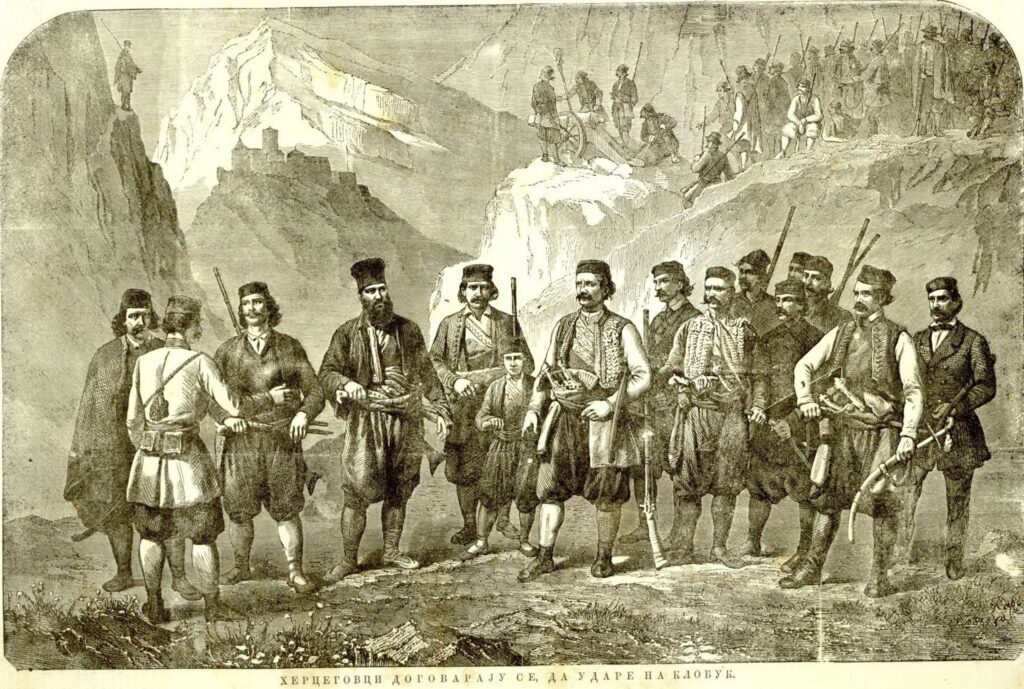
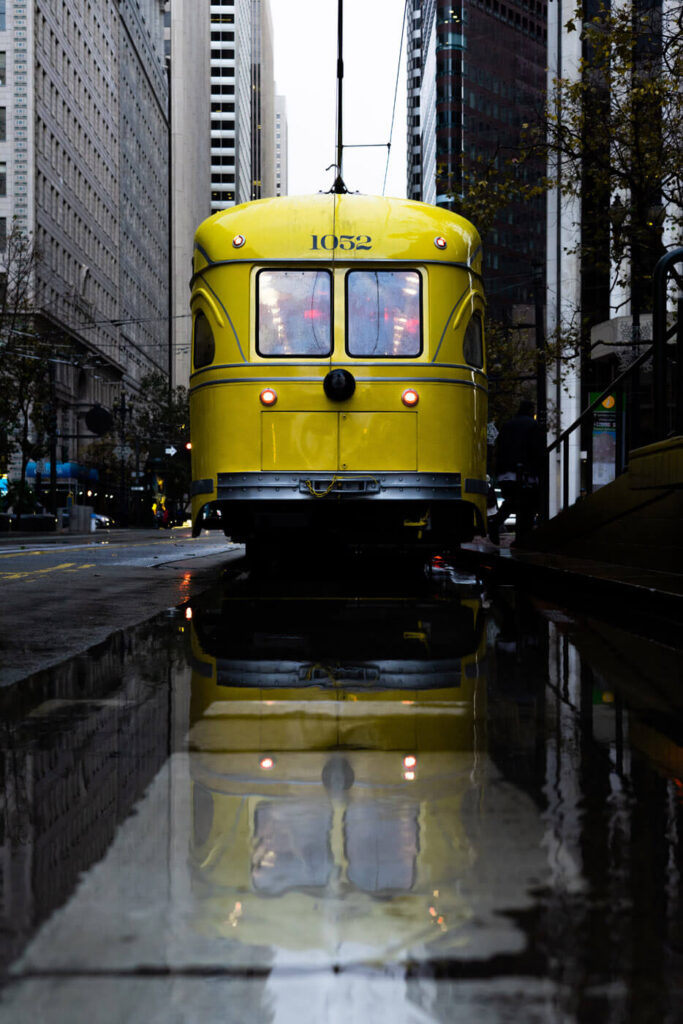
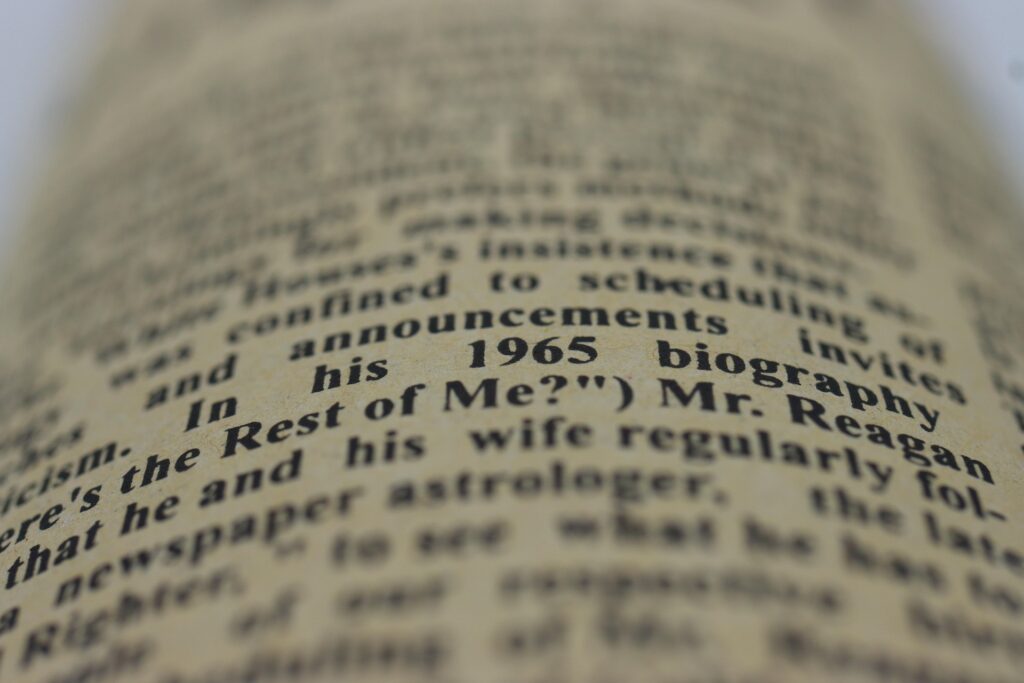
One joy of public writing, which I didn’t see coming, is having talented people make art based on your ideas (Figures 1– 3).


Responses